Cloud-Based ERP vs. On-Premise ERP, Which One is Better?
Oleh Tim Distri · · Diperbarui · 3 menit baca
Daftar isi
Ringkasan
- ERP (Enterprise Resource Planning) is software that manages business activities such as sales, production, finance, and HR. It runs either on-premise or in the cloud.
- On-premise ERP needs hardware, servers, IT staff, and paid upgrades. Cloud ERP runs on a monthly subscription that covers maintenance, support, upgrades, and security, and can be accessed from any internet-connected device.
- Cloud ERP benefits: lower cost, scales without new hardware, regular updates outside working hours, and centralized encrypted data with periodic backups. An Alibaba Cloud 2020 survey found 77% of Indonesian businesses already used cloud technology.
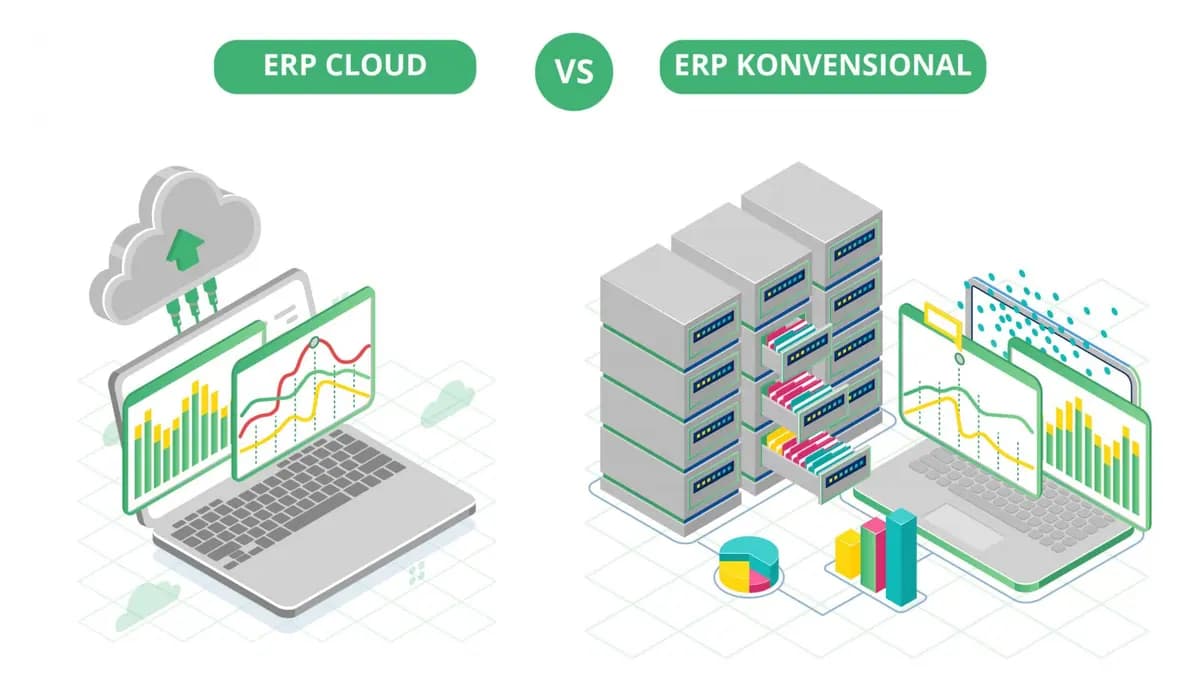
At present, many companies use software to optimize business processes. One of the most popular is ERP. Enterprise Resource Planning (ERP) is a set of software to help manage business activities, ranging from sales, production, finance, HR, and others. ERP software has various types, one of them is conventional/on-premise ERP system that the business has widely used. Recently, the Cloud-based ERP system also began to rise. However, because it is considered as “newcomers,” many companies still doubt it. Nevertheless, based on the Alibaba Cloud 2020 survey, 77% of businesses in Indonesia have already used Cloud-based technology, and 83% of them felt that Cloud helps them meet business needs during the Covid-19 pandemic.
Why is cloud-based software better?
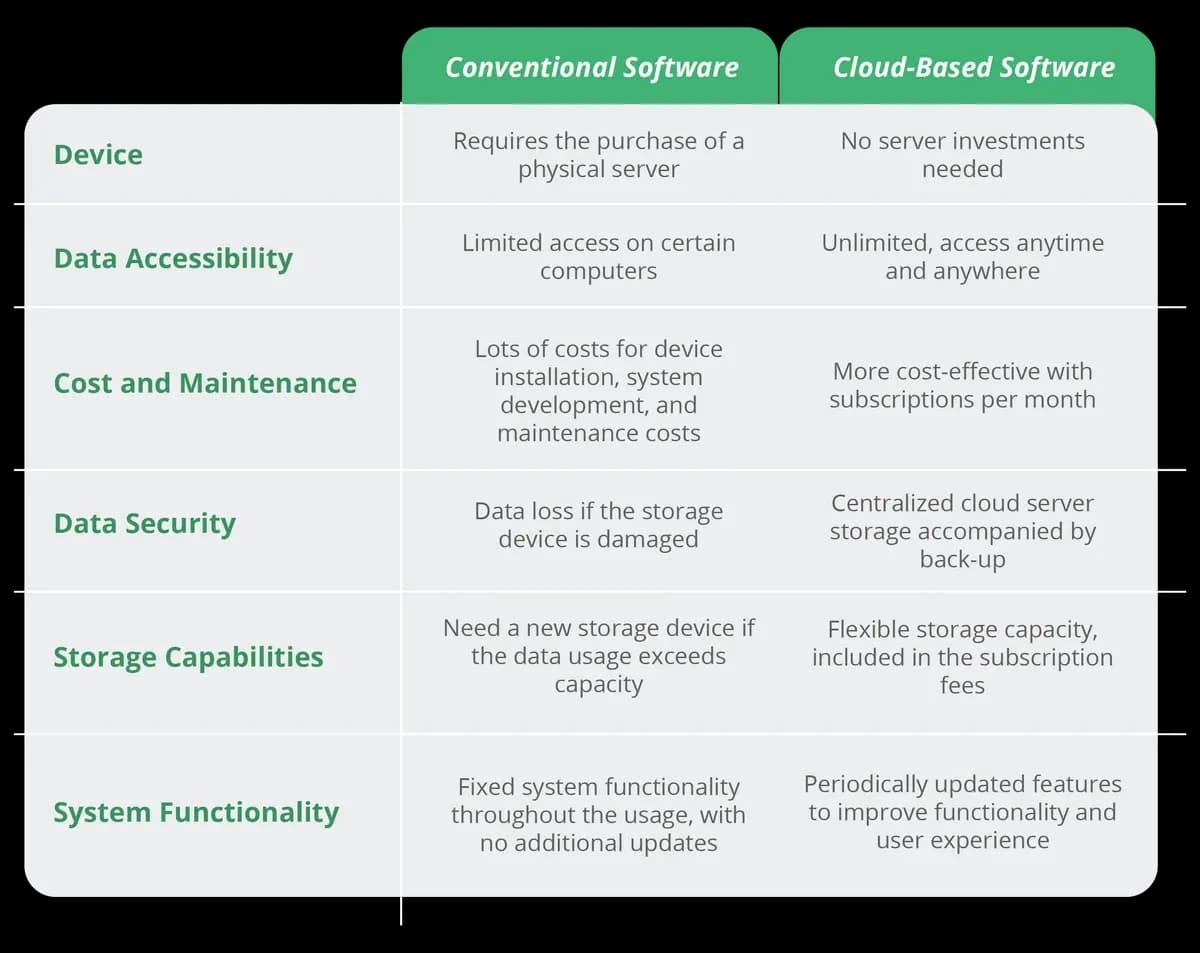
Apart from software installations, conventional ERP systems require a lot of additional investments, ranging from hardware, servers, to IT resources (administrators/operators). Not to mention high maintenance costs and upgrade costs to get the latest features. Meanwhile, the cloud-based system does not require additional hardware or special operators. Managers and relevant staff can access it from their computers, laptops, and other gadgets that are connected to the internet. Anytime and anywhere.
Here are the benefits that your business will get if you apply a cloud-based system:
1. Lower costs
Cloud-based software investment costs are lower because they do not require additional special operators, hardware, and maintenance charges. Instead, you spend a recurring subscription per month, or operational costs at the beginning, at a more affordable price. These costs include all maintenance activities, support, upgrades, and security. As a result, business operational costs are becoming more economical.
2. High scalability
Business operations traffic sometimes experiences an increase and decrease in a certain period. With cloud software, the company can use it without buying new hardware or submitting additional server specifications.
3. Periodical updates & upgrades
Cloud-based ERP ensures your business always uses the most up-to-date system. Throughout the subscription, the system will continue to be updated and upgraded regularly without third parties’ help. Updates do not take a long time and are usually done outside of operating hours to avoid interfering with business operations.
4. Guaranteed data security
Cloud-based ERP has a level of security and high compliance with data management. All data is stored in a centralized server equipped with data encryption and complicated algorithms, ensuring safe data conditions at any time. The data can also be backed up periodically. Make sure you choose an official certified system with ISO standardization.
5. Easy & flexible access
Not only guaranteed data security, but Cloud-based ERP also offers convenience in its use. As long as a user device with an access authority is connected to the internet, the system can be accessed in real-time, anytime, anywhere—no need to bother carrying special hardware.
Are you still confused about which system is better? Check the following comparison.
How is it? Still hesitant to apply Cloud-based ERP? Want to know other advantages? If your business is involved in distribution industries, you can start with the Distri Free plan to see how this system can help your business.
Pertanyaan yang sering diajukan
What is the difference between cloud and on-premise ERP?
On-premise ERP is installed on the company's own servers and needs hardware and IT staff; cloud ERP is accessed over the internet on a subscription that includes maintenance and upgrades.
Is cloud ERP cheaper?
Usually yes, because there is no extra hardware, server, or dedicated operator, and maintenance and upgrades are included in the subscription.
Is data safe in cloud ERP?
Data is stored on centralized servers with encryption and periodic backups. Choose a provider with recognized security certification such as ISO.